
There are projects that are technically demanding. There are projects that are logistically complex. And then there are projects where both of those things are true, and where the standard of the finished result is measured not against what's typical for the industry, but against the building itself.
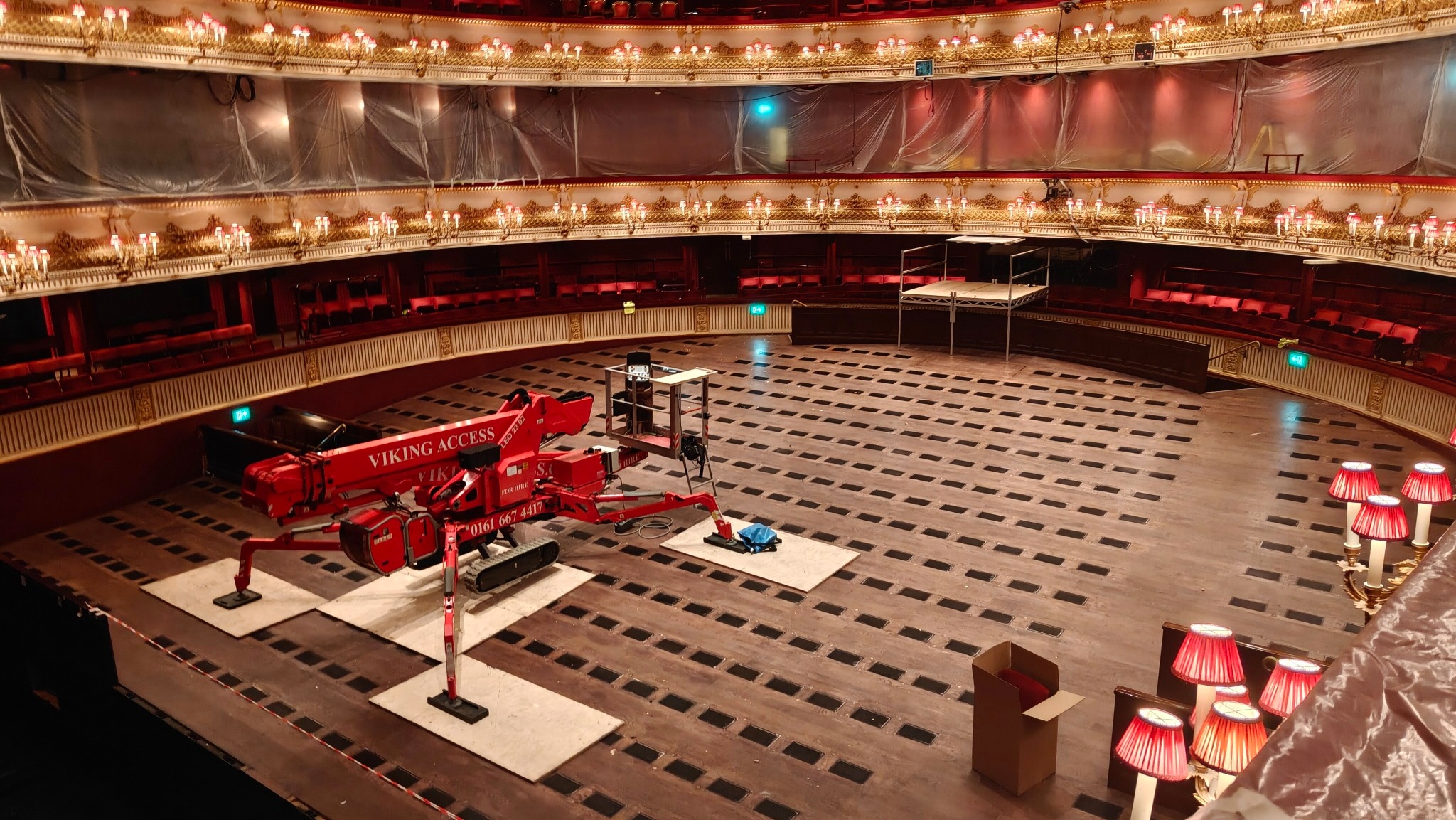
The Royal Opera House in Covent Garden is one of those buildings. Grade I listed, home to the Royal Opera and the Royal Ballet, it has occupied the same block in central London since 1732 in various forms — the current building dating to 1858. Every surface in it carries weight. The floors are no exception.
When Floorworks was engaged to carry out flooring restoration at the Royal Opera House, the brief was clear: the result had to be worthy of the space. This is how we approached it.
The Building and What It Demands
The Royal Opera House isn't a difficult client in the conventional sense. Nobody is asking you to cut corners or work below standard. The difficulty is different — it's the weight of expectation that comes with working in a building of this significance, where every decision is made against the backdrop of a 300-year institution.
The floors at the Royal Opera House include wide solid oak boards in the public-facing areas and stair treads that carry the same timber across the transition between levels — a continuity of material that gives the building a coherent, considered quality. These aren't new floors. They carry the history of the building in their grain, and the restoration had to honour that history rather than erase it.
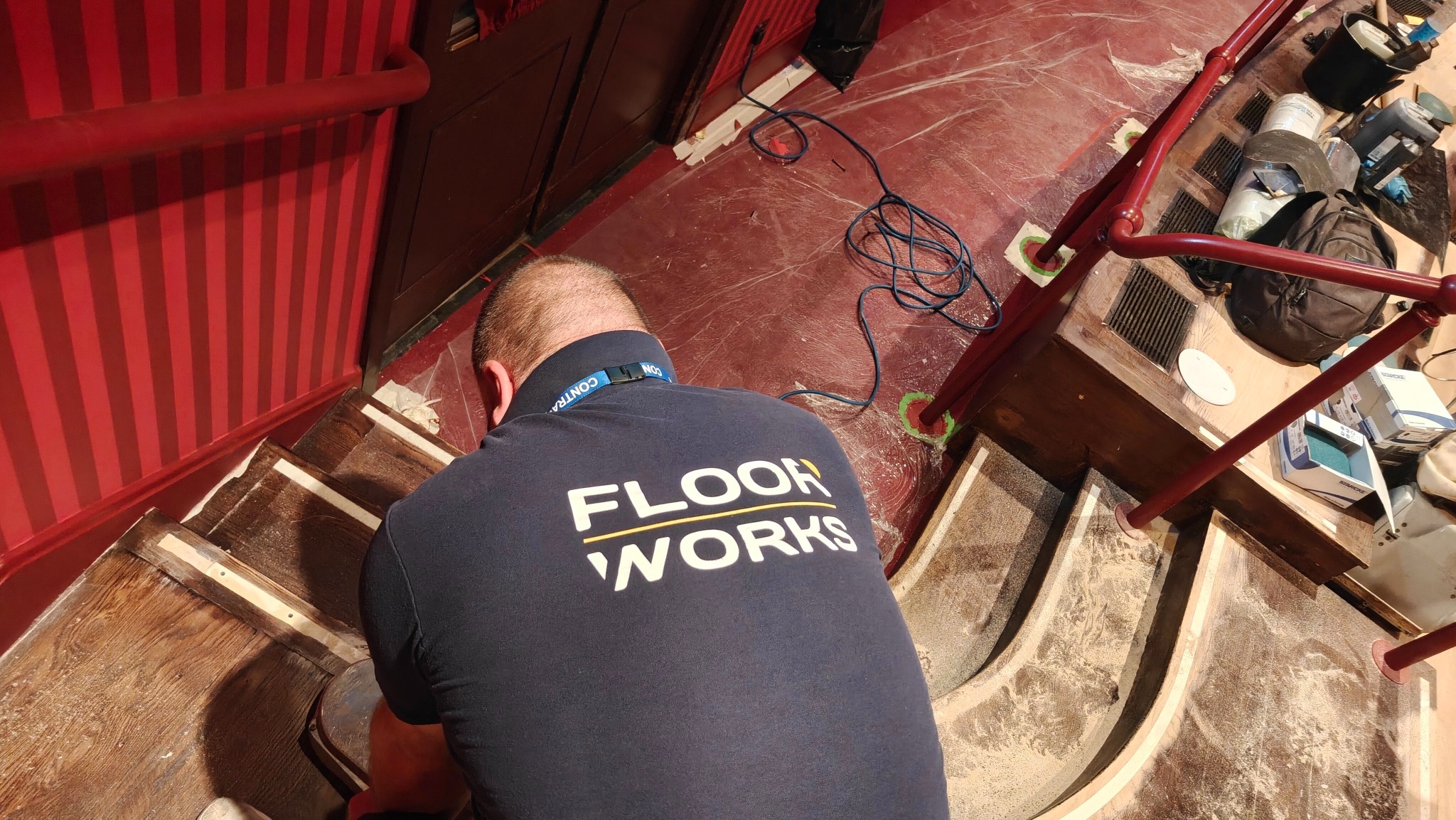
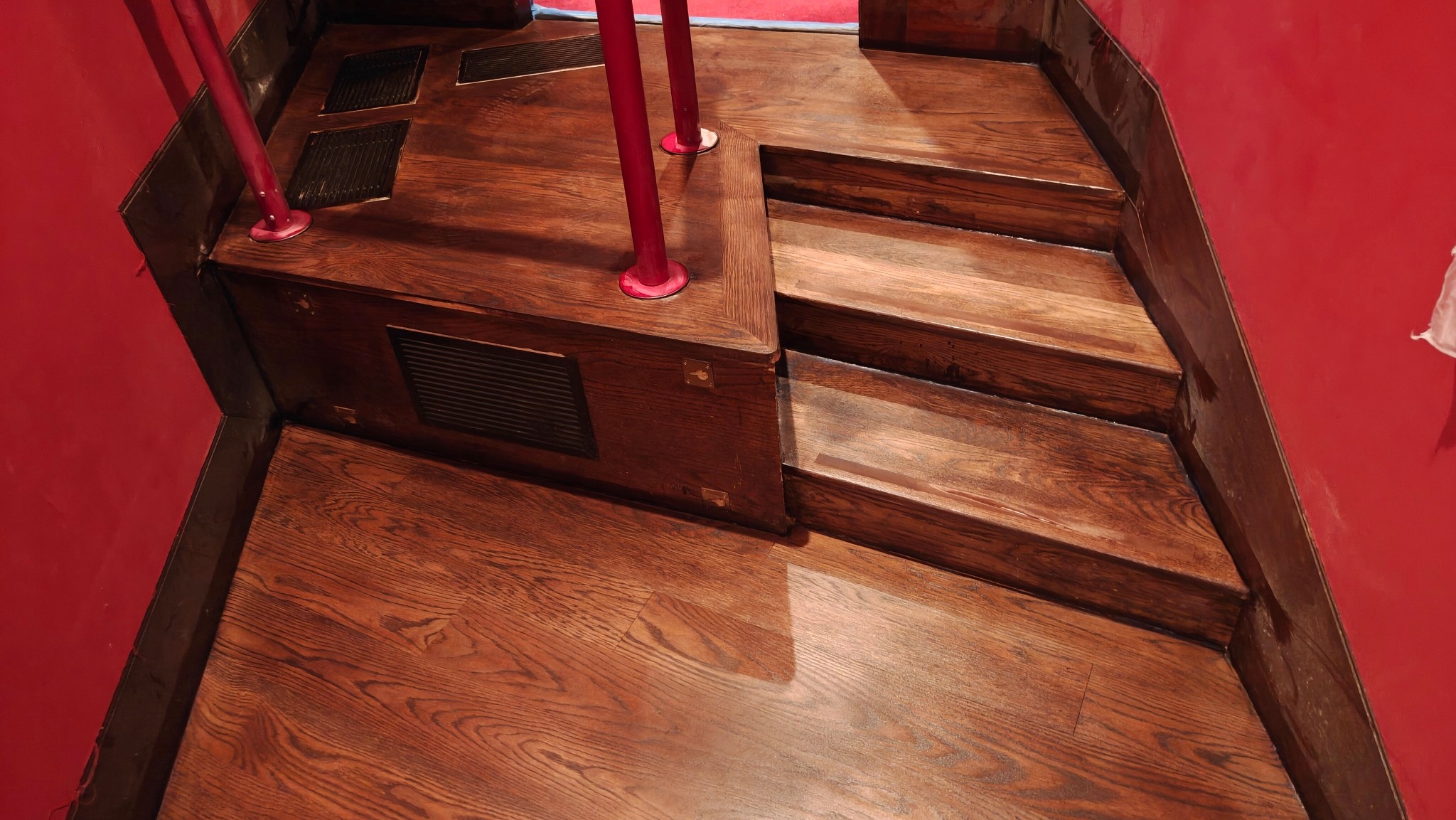
The staircase in particular presented the most visible challenge. Stair treads in a public building at this level of use take punishment from every direction — foot traffic in heeled shoes, event crowds, daily operational movement. The existing finish had worn unevenly, with the treads showing concentrated wear in the centre while the risers and side cheeks had aged differently. The task was to bring the whole together as a unified surface — consistent in colour, consistent in sheen, properly protected — without making it look like it had just been installed rather than carefully restored.
The Approach: Stained and Lacquered Oak
The timber throughout the restored areas is solid oak — wide plank format on the floor and purpose-cut solid treads on the stairs. Oak of this quality, in these dimensions, is a material that rewards careful restoration. The open grain absorbs stain evenly and consistently when the preparation is right, and the medullary rays that run through the boards at certain angles catch the light in a way that gives the surface genuine depth.
The restoration was carried out in two distinct stages — preparation and finishing — with both handled to a standard that the building required.
-
Preparation
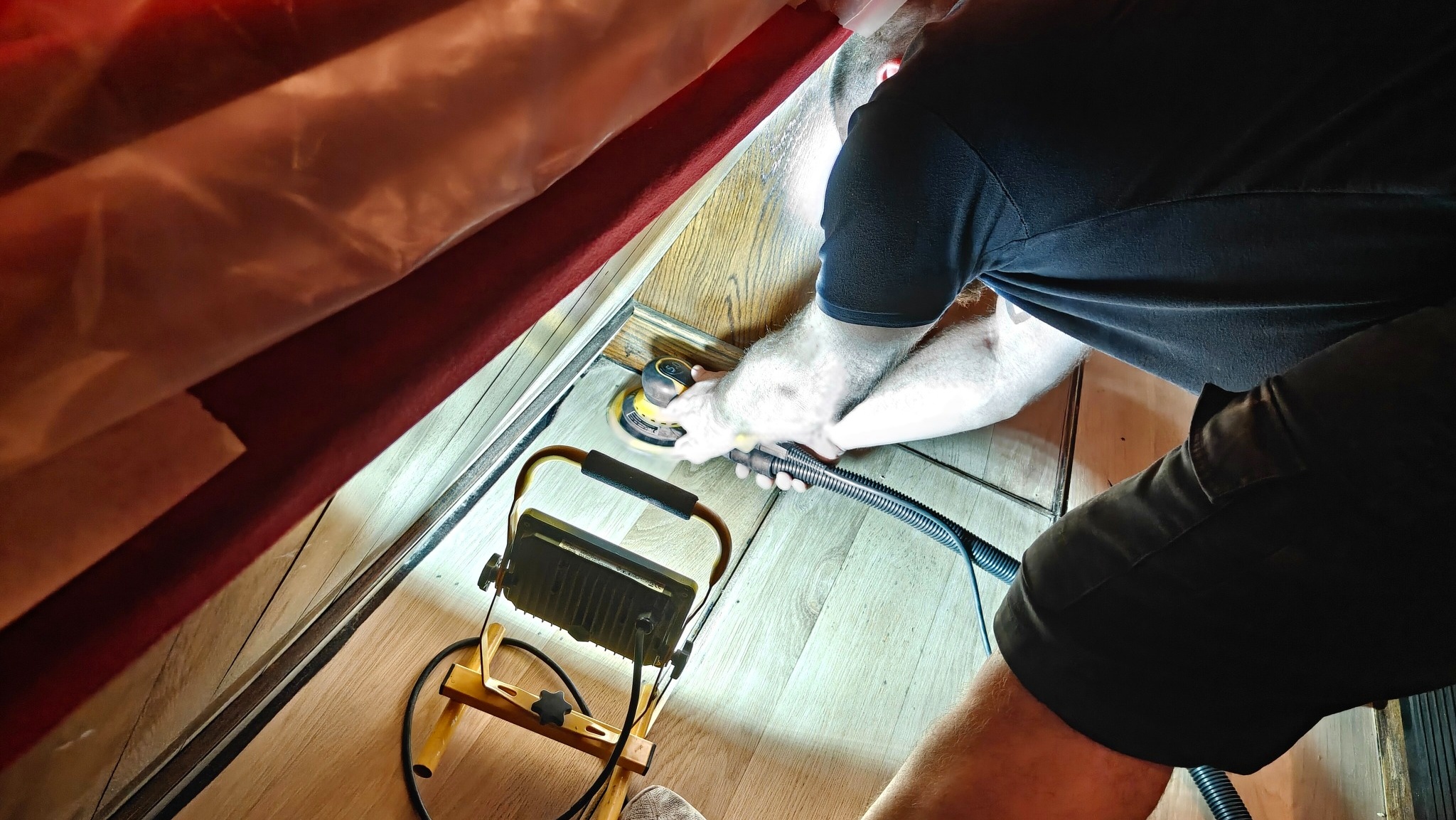
The existing finish was stripped back completely using professional sanding equipment — drum sanding on the open floor areas, the Mirka DEROS RS for the initial stripping of the stair treads where the drum sander can't operate, and the DEROS II 650 for the refining passes through progressively finer grits. The preparation sequence followed the grit progression appropriate for solid oak — through the coarse passes that remove the old finish and surface damage, through the medium grits that remove the scratch pattern of the previous pass, and to the fine passes that produce the uniformly abraded surface that takes a stain consistently. See our article on what grit sandpaper should be used for wood floor sanding for a detailed breakdown of why this sequence matters.
-
Staining
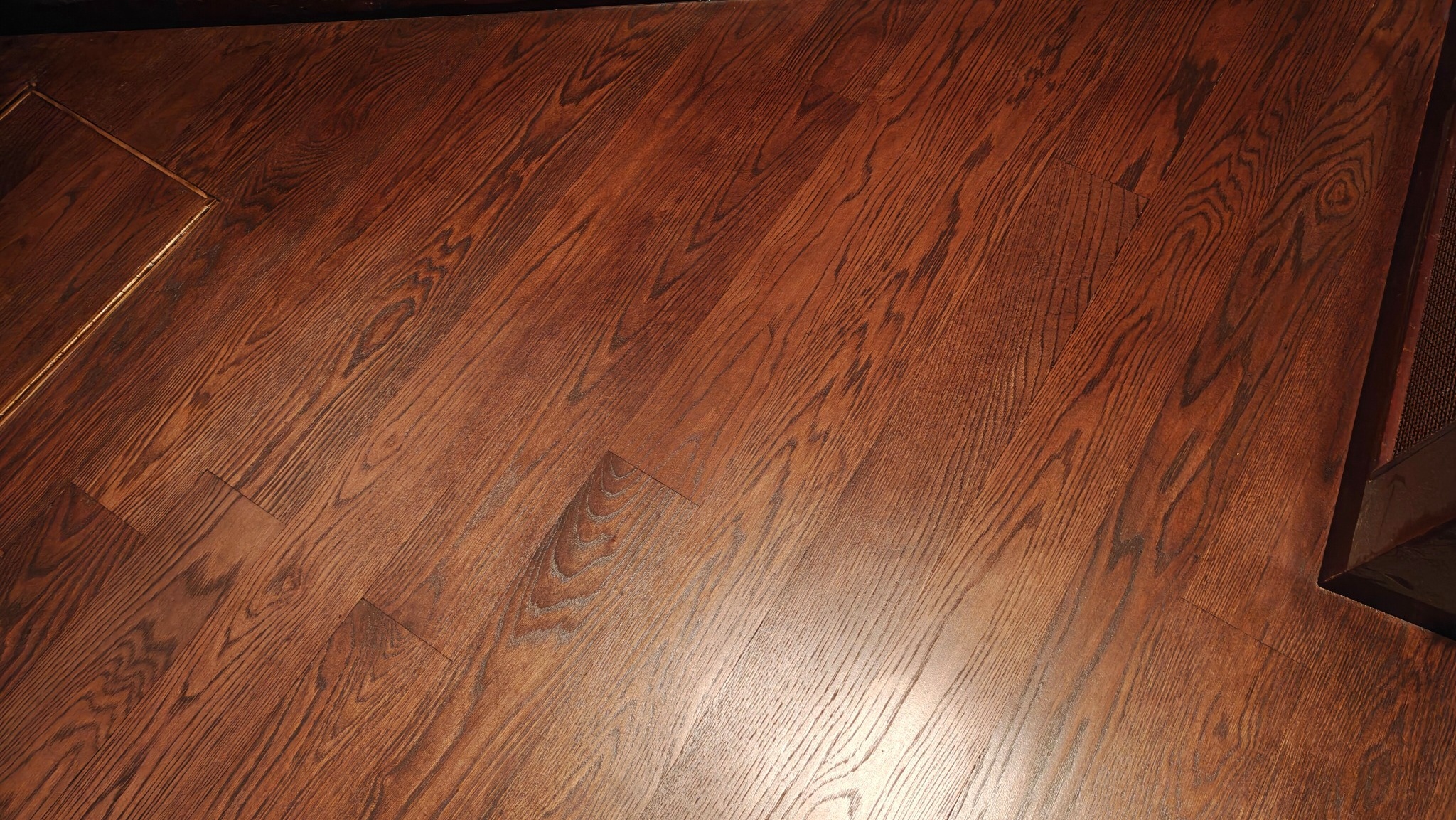
The oak was finished in a rich, deep walnut-brown stain — a tone that deepens the natural warmth of the oak while preserving the character of the grain and the distinctive medullary ray markings that identify the species. The stain was applied to the fully prepared bare timber and allowed to penetrate and dry completely before any lacquer was introduced. On a project of this profile, there is no rushing this stage — the colour consistency across the floor and the staircase had to be exact. For more on how staining works on different timber species and why preparation determines the result, see our article on popular staining of wooden floors with lacquered finish.
-
Lacquering with Bona Traffic HD
The finish specified for this project was Bona Traffic HD — our standard specification for high-traffic commercial environments and the benchmark professional lacquer in the UK market. The choice was straightforward: the Royal Opera House needs a finish that handles sustained, intensive public traffic without degrading quickly, that doesn't yellow over time, and that can be applied within a timeframe that returns the space to use without extended disruption.
Bona Traffic HD is a two-component water-based polyurethane — it requires mixing with a hardener before application, and the cross-linking that occurs during curing is what gives it exceptional hardness and durability. The finish was applied in multiple coats — primer first, then two to three topcoats — with between-coat sanding to flat any grain raise and ensure a smooth, consistent film build. Light foot traffic was possible within 12 hours of the final coat; full cure and maximum hardness developed over the following seven days. For more detail on drying and curing timelines, see our article on how long does floor lacquer take to dry and cure.
The Staircase: Where the Work Is Most Visible
If there is one area of a flooring restoration project where the quality of the work is most immediately apparent, it's the staircase. A staircase connects levels visually and physically — every tread is seen at eye level as you approach it, every riser is visible, every transition between tread and cheek is a detail that either reads as clean and intentional or reveals something that wasn't done quite right.
At the Royal Opera House, the stair treads and the floor are the same timber — which means the colour and sheen had to match across the transition between horizontal and vertical surfaces, and between the open floor area and the more complex geometry of the stair. This continuity is harder to achieve than it looks. The stair treads and risers are sanded by different equipment and by hand in the tightest areas, and they absorb stain and lacquer at slightly different rates depending on their grain direction and the degree of wear they'd accumulated before restoration. Managing this to produce a result that reads as one unified surface is the skill the work requires.
The result — as the image shows — is wide solid oak boards and treads in a deep, warm walnut-brown stain, finished in Bona Traffic HD to a consistent matt-satin sheen. The grain of the oak is clearly visible through the finish, including the natural knot detail in the treads that gives the staircase genuine character. The stain deepens the oak without masking it. The lacquer protects without obscuring.
Working in a Listed Building: The Constraints That Shaped Every Decision
Grade I listed status means that any work carried out within the building has to respect and preserve the existing fabric. For flooring restoration, this has specific practical implications.
-
Dust control
Sanding a historic building without proper dust management is not an option — fine particulate settling into ventilation systems, onto decorative surfaces, and into the mechanisms of a fully operational performance venue would be unacceptable. Floorworks uses Bona dust-free sanding equipment throughout every project — the machines capture the sanding dust at source rather than releasing it into the air. On a project at the Royal Opera House, this wasn't a preference. It was a requirement.
-
Chemical sensitivity
The materials used in a listed building exist alongside historic surfaces, decorative finishes, and fabric that's irreplaceable. The water-based products we use — both the stain and Bona Traffic HD — have significantly lower VOC content than solvent-based alternatives, which matters in a building where fumes affecting other surfaces or being trapped in an enclosed historic interior is a genuine concern.
-
Working around the operation
The Royal Opera House doesn't stop. Performances, rehearsals, administrative functions, events — the building operates continuously. Floor restoration had to be scheduled and phased around the building's programme, completed in sections, and handed back in a condition that was ready for use without extended curing delays. Bona Traffic HD's fast return-to-use timeline — light traffic within 12 hours of the final coat — is one of the practical reasons it's specified for exactly these situations.
What This Project Represents
There is something genuinely motivating about working in a building like the Royal Opera House. The floors have been walked on by performers, conductors, audience members, and staff for generations — and the restoration adds another chapter to that history rather than replacing it. The wide oak boards and stair treads still carry their grain, their character, their sense of being real timber in a building that was built to last. The stain and the lacquer protect and enhance that quality. They don't replace it.
This is what flooring restoration at this level looks like when it's done properly — not a floor that looks new, but a floor that looks cared for. There's a difference, and in a building of this significance, it's the difference that matters.
Summary
The Royal Opera House flooring restoration combined the technical demands of a Grade I listed heritage building with the performance requirements of one of London's busiest public venues. Wide solid oak boards and staircase treads were fully stripped, stained to a deep walnut-brown tone, and finished with multiple coats of Bona Traffic HD — the benchmark professional 2K lacquer for high-traffic commercial environments. Dust-free sanding equipment was used throughout, and the project was phased to return areas to use quickly without compromising the quality of the result.
At Floorworks, this is the standard we bring to every commercial project — from listed heritage buildings to restaurants, schools, and offices across London. For more on our commercial flooring restoration services, our stair restoration service, or the lacquers and finishes we use, explore our guides — or get in touch for a free site assessment on your own project.


